You are here: Urology Textbook > Drugs in Urology > Alkali citrates
Methionine: Mechanism, Adverse Effects, Contraindications, and Dosage
Indications for Methionine
For urine acidification in the following situations:
- Recurrent urinary tract infections in selected patients (e.g., neurogenic bladder dysfunction, long-term indwelling urinary catheterization).
- To reduce the recurrence risk of infection-related and other phosphate stones as adjuvant therapy with invasive stone treatment (URS, PNL) and prolonged antibiotic therapy.
- To optimize the efficacy of certain pH-dependent antimicrobial agents (e.g., nitrofurantoin, methenamine, selected β-lactam antibiotics).
The overall evidence base for the efficacy of methionine in urology is limited and relies mainly on small, uncontrolled case series or retrospective analyses. Randomized, placebo-controlled trials with clinically relevant endpoints are not available (IQWiG 2010). In current urological guidelines, methionine plays only a minor role. Many patients also take methionine as a dietary supplement in combination with cranberry or D-mannose; robust data to support these combinations are lacking.
Mechanism of Action of Methionine
Methionine is an essential sulfur-containing amino acid. The body metabolizes excess methionine, and oxidation of its sulfur-containing metabolites generates protons that are excreted in the urine together with sulfate.
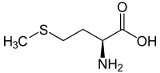
The urine-acidifying effect of methionine can reduce the adhesion of pathogenic bacteria to urothelial cells, may exert a bacteriostatic effect, and can enhance the activity of certain antibiotics. In addition, by lowering urine pH, methionine can increase the solubility of phosphate stones, particularly struvite-containing stones.
Pharmacokinetics of Methionine
After absorption in the small intestine, methionine reaches the liver via the portal vein, where further metabolism occurs. Its degradation via several intermediates leads to the formation of pyruvate and sulfate and to the generation of protons, which are excreted in the urine together with sulfate.
Adverse Effects of Methionine
Treatment with methionine can cause gastrointestinal adverse effects such as nausea, vomiting, abdominal pain, and dyspepsia. Enhanced methionine catabolism can increase homocysteine concentrations, which may, in the long term, contribute to a higher cardiovascular risk. In patients with preexisting hepatic insufficiency or at high dosages, there is also a risk of metabolic acidosis and worsening of hepatic encephalopathy.
Drug Interactions
Methionine may reduce the effectiveness of levodopa in patients with Parkinson’s disease.
Contraindications to Methionine
- Homocystinuria
- Uric acid and cystine stone disease
- Severe chronic kidney disease with impaired potassium and acid excretion
- Oxalosis
- Methionine adenosyltransferase deficiency
- Metabolic (e.g., renal tubular) acidosis
- In infants
Use methionine with caution in patients with hepatic insufficiency, preexisting hyperhomocysteinemia, advanced coronary artery disease, or decompensated heart failure.
Dosing of Methionine
Methionine 500 mg 1–1–1 to 2–2–2 (total daily dose 1.5–3 g). The target urine pH is 5.7–6.2, and patients should monitor this regularly with self-testing. To prevent uric acid and cystine stone formation, avoid sustained, marked urine acidification with pH values clearly below 5.5.
| Alkali citrates | Index | Duloxetine |
Index: 1–9 A B C D E F G H I J K L M N O P Q R S T U V W X Y Z
References
EAU Guidelines: Urolithiasis [Online]. https://uroweb.org/guidelines/urolithiasis/
IQWIG (2010) L-methionine in patients with neurogenic bladder disorders: neither benefit nor harm proven. URL: https://www.iqwig.de/en/presse/press-releases/press-releases-detailpage_10891.html.
Siener R, Struwe F, Hesse A. Effect of L-Methionine on the Risk of Phosphate Stone Formation. Urology. 2016 Dec;98:39-43. doi: 10.1016/j.urology.2016.08.007.
 Deutsche Version: Methionin für die Harnansäuerung
Urology-Textbook.com – Choose the Ad-Free, Professional Resource
This website is designed for physicians and medical professionals. It presents diseases of the genital organs through detailed text and images. Some content may not be suitable for children or sensitive readers. Many illustrations are available exclusively to Steady members. Are you a physician and interested in supporting this project? Join Steady to unlock full access to all images and enjoy an ad-free experience. Try it free for 7 days—no obligation.
New release: The first edition of the Urology Textbook as an e-book—ideal for offline reading and quick reference. With over 1300 pages and hundreds of illustrations, it’s the perfect companion for residents and medical students. After your 7-day trial has ended, you will receive a download link for your exclusive e-book.