You are here: Urology Textbook > Drugs in Urology > Gemcitabine
Gemcitabine: Mechanism, Adverse Effects, Contraindications, and Dosing
Mechanism of Action of Gemcitabine:
Gemcitabine is a prodrug; within cells, it is converted to gemcitabine triphosphate, a cytidine nucleoside analog. Incorporation into DNA—predominantly during the S phase—leads to “masked chain termination,” which prevents excision repair from removing the misincorporated nucleotide, halts DNA synthesis, and triggers apoptosis. Additionally, the diphosphate metabolite inhibits ribonucleotide reductase, thereby reducing the intracellular deoxynucleotide pool and further impairing DNA replication.
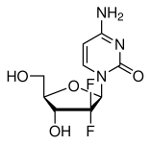
Urologic Indications of Gemcitabine:
- In metastatic bladder cancer (urothelial carcinoma), gemcitabine is combined with cisplatin. For patients ineligible for cisplatin, substitution with carboplatin is used with somewhat lower efficacy.
- Neoadjuvant or adjuvant chemotherapy of bladder cancer or upper tract urothelial carcinoma in combination with cisplatin before or after curative surgery (cystectomy or nephroureterectomy).
- Off-label use in Europe: intravesical therapy of non-muscle invasive high-grade bladder cancer after BCG failure, sometimes in combination with docetaxel. In the United States, since 2025, an intravesical gemcitabine delivery system (Inlexzo) has marketing authorization, which releases the drug over three weeks (Daneshmand et al., 2025).
Pharmacokinetics of Gemcitabine:
Gemcitabine is administered as a 30-minute intravenous infusion; prolonging the infusion time increases exposure and toxicity. Metabolism occurs predominantly via cytidine deaminase in the liver, blood, and other tissues, resulting in inactive metabolites that are primarily eliminated by the kidneys. The plasma half-life is approximately 40–90 minutes, whereas intracellular active triphosphate metabolites persist longer.
Adverse Effects of Gemcitabine:
Hematologic:
Very common bone marrow suppression with neutropenia, anemia, and thrombocytopenia. Hemolytic uremic syndrome (HUS) and thrombotic microangiopathy are rare.
Gastrointestinal:
Very common nausea and vomiting; prophylactic antiemetic therapy is recommended. Diarrhea, constipation, decreased appetite, and mucositis occur frequently.
Liver:
Frequent elevations of transaminases, alkaline phosphatase, and bilirubin. Usually reversible.
Respiratory:
Frequent dyspnea and cough; bronchospasm or interstitial pneumonitis may occur occasionally. Very rare severe pulmonary toxicity up to acute respiratory distress syndrome (ARDS); if suspected, interrupt therapy immediately. Concomitant thoracic radiotherapy increases the risk of toxicity.
Skin:
Very common maculopapular rash and pruritus; alopecia is common. Very rare bullous cutaneous reactions.
Renal:
Proteinuria or hematuria occurs frequently; acute kidney injury or HUS is rare.
General Symptoms:
Very common peripheral edema and influenza-like symptoms (fever, myalgias, headache, fatigue).
Very Rare:
Anaphylaxis, capillary leak syndrome, thromboembolic events, myocardial ischemia or infarction, heart failure, peripheral vasculitis, and posterior reversible encephalopathy syndrome (PRES).
Contraindications of Gemcitabine:
Hypersensitivity to gemcitabine. Active, uncontrolled severe infections. Pregnancy and lactation.
Withhold gemcitabine in the presence of an absolute neutrophil count below 500/μl, febrile neutropenia, platelets below 50,000/μl, or severe grade ≥ 3 toxicities such as HUS, pneumonitis, hepatic failure, or renal failure.
Dosing of Gemcitabine and Cisplatin:
The combination of gemcitabine and cisplatin can be administered in 28-day or 21-day cycles. Many centers prefer the 21-day schedule because it leads to fewer treatment delays with comparable efficacy (Parra et al., 2002)
Cycle Length 21 Days:
Gemcitabine 1,000 mg/m2 on days 1 and 8. Cisplatin 70 mg/m2 on day 1 or 2.
Dosing of Gemcitabine as Monotherapy:
Cycle length 21 days: gemcitabine 1,000 mg/m2 on days 1 and 8.
Dose Reduction of Gemcitabine:
Reduce to 75% for an absolute neutrophil count below 1,000/μl and platelets below 100,000/μl. See above (Contraindications) for holding or discontinuing gemcitabine in the event of severe toxicity.
| Etoposide | Index | Mitomycin C |
Index: 1–9 A B C D E F G H I J K L M N O P Q R S T U V W X Y Z
References
Daneshmand S, Van der Heijden MS, et al. TAR-200 for Bacillus Calmette-Guérin-Unresponsive High-Risk Non-Muscle-Invasive Bladder Cancer: Results From the Phase IIb SunRISe-1 Study. J Clin Oncol. 2025 Jul 30:JCO2501651. doi: 10.1200/JCO-25-01651.
Lehmann u.a. 2003 LEHMANN, J. ; RETZ, M. ;
LIPPERT, C. ; ALBERS, P. ; STOCKLE, M.:
[Gemcitabine in advanced bladder cancer].
In: Urologe A
42 (2003), Nr. 1, S. 63–77
Parra u.a. 2002 PARRA, H. S. ; CAVINA, R. ;
LATTERI, F. ; SALA, A. ; DAMBROSIO, M. ;
ANTONELLI, G. ; MORENGHI, E. ; ALLOISIO, M. ;
RAVASI, G. ; SANTORO, A.:
Three-week versus four-week schedule of cisplatin and gemcitabine:
results of a randomized phase II study.
In: Ann Oncol
13 (2002), Jul, Nr. 7, S. 1080–1086
von der Maase et al., “Gemcitabine and cisplatin versus methotrexate, vinblastine, doxorubicin, and cisplatin in advanced or metastatic bladder cancer: results of a large, randomized, multinational, multicenter, phase III study,” J Clin Oncol, vol. 18, no. 17, pp. 3068–77, 2000.
 Deutsche Version: Nebenwirkungen und Kontraindikationen von Gemcitabin
Urology-Textbook.com – Choose the Ad-Free, Professional Resource
This website is designed for physicians and medical professionals. It presents diseases of the genital organs through detailed text and images. Some content may not be suitable for children or sensitive readers. Many illustrations are available exclusively to Steady members. Are you a physician and interested in supporting this project? Join Steady to unlock full access to all images and enjoy an ad-free experience. Try it free for 7 days—no obligation.
New release: The first edition of the Urology Textbook as an e-book—ideal for offline reading and quick reference. With over 1300 pages and hundreds of illustrations, it’s the perfect companion for residents and medical students. After your 7-day trial has ended, you will receive a download link for your exclusive e-book.